
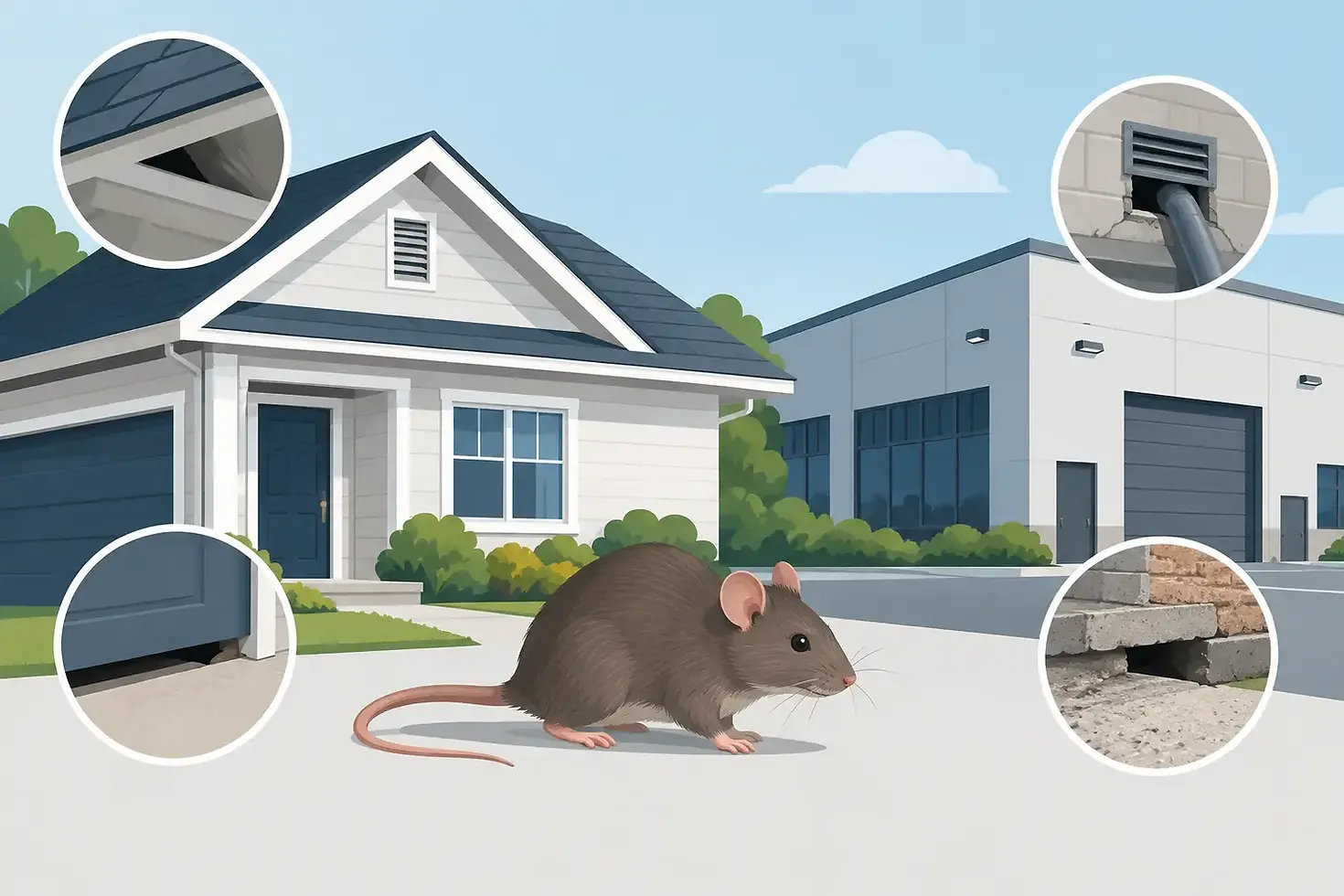
Rodent Entry Point Guide for Homes and Businesses

A mouse can squeeze through a gap around the width of a pencil. Young rats need far less room than most people expect. That is why a proper rodent entry point guide starts outside your property, not with traps in the kitchen. If rodents are already indoors, finding and closing their route in is what stops a short-term treatment becoming a repeat problem.
For homes, flats, rental properties and commercial premises, access points are often small, low down and easy to miss. A loose air brick cover, a gap around a pipe or a damaged drain can provide a direct route to food, warmth and shelter. The answer is not to seal every opening blindly. Buildings need ventilation, and poorly planned repairs can create damp or safety issues. The aim is to identify genuine rodent access, treat active activity, then carry out suitable proofing.
Start with signs, not assumptions
Before sealing gaps, look for evidence that rodents are actually using them. Fresh droppings, greasy rub marks along walls, gnawed plastic or timber, and scratching sounds after dark all help build a picture. Rats often leave larger, blunt-ended droppings and may travel along exterior walls, drains, bin areas and overgrown edges. Mice tend to follow internal edges, behind kitchen units, under floors and within lofts.
Outside, watch for disturbed soil beside foundations, chewed vents, torn insulation around pipework and small runs through vegetation. A gap with cobwebs undisturbed across it is less likely to be active than one with dirt, grease or fresh gnawing around the edge. In business premises, inspect delivery doors, waste stores, storage rooms and utility areas particularly carefully. Food, cardboard and frequent door use can make these locations an easy starting point.
Do not assume the most obvious hole is the only one. Rodents commonly have more than one route in, especially in older terraces, converted properties and buildings with extensions.
Rodent entry point guide: where to inspect first
Air bricks and ventilation openings
Air bricks are among the most common access points around Manchester homes. They are designed to ventilate suspended timber floors, so blocking them with mortar, expanding foam or plastic sheeting can cause damp, rot and costly damage. Instead, inspect for cracked grilles, missing covers and openings that have become enlarged.
Fine, rodent-resistant mesh fitted securely behind or over an air brick can help, provided airflow remains adequate. The mesh needs to be durable and correctly fixed at the edges. Lightweight insect mesh is not a rodent-proof solution and can quickly be chewed through.
Gaps around pipes, cables and meter boxes
Gas, water, broadband and electrical services often pass through external walls with a gap around them. Those gaps can widen as sealant fails or buildings move. Check beneath kitchen sinks, behind washing machines, around boiler pipes, near external taps and inside utility cupboards.
For small gaps, a professional-grade combination of appropriate filler and metal mesh is usually more reliable than foam alone. Foam may look tidy on day one, but rats and mice can chew it. Larger openings may need a solid repair using mortar, metal flashing or a purpose-made collar around the pipe. Take care around gas and electrical services. If there is any doubt, use a competent professional rather than disturbing the installation.
Doors, roller shutters and loading areas
A door that appears to close properly in daylight may leave enough clearance for a mouse at the threshold. Check garage doors, side gates leading into attached structures, cellar doors, communal entrance cupboards, sheds and commercial roller shutters. Look from inside with the lights off, or use a torch outside, to reveal daylight around the edges.
Brush strips and threshold seals can be effective where the door still needs to operate normally. For businesses, this is often a balance between pest control, fire safety, access requirements and heavy daily use. A seal that is too flimsy will fail quickly; one that prevents the door closing safely is not the answer either.
Rooflines, lofts and cavity routes
Squirrels and mice may enter higher up than expected. Check broken roof tiles, gaps at eaves, damaged soffits, loose fascia boards and holes around cables entering the building. Climbing plants, overhanging branches and stacked materials near walls can all make access easier.
Do not block a suspected roof entry point while you can still hear activity inside a loft or wall void. Trapping rodents indoors can lead to odour, damage and further attempts to escape into living areas. Active infestation treatment should come first, followed by proofing once the route and level of activity are clear.
Drains, gullies and damaged pipework
Rats are strong swimmers and can travel through defective drains. Signs can include recurring rat activity despite proofing, holes close to drain runs, foul smells, slow drainage or activity around inspection chambers. A broken drain is not always visible from above, so persistent problems may need a drain survey rather than repeated baiting.
Check gully grates and drain covers for damage, but avoid fitting anything that restricts drainage or creates a flooding risk. Drain defects should be repaired properly. Simply covering an opening at ground level may shift the rodent route elsewhere without addressing the cause.
Check the areas rodents use after getting inside
Entry points tell only half the story. Rodents need a reason to stay. Once indoors, inspect the routes between their access point and food or nesting areas. Kitchens, pantries, boiler cupboards, understairs voids, suspended floors, loft insulation and cluttered storage are frequent hotspots.
Keep food in sealed containers, clear spills promptly and avoid leaving pet food down overnight where possible. Outdoor bins should close securely, while bird feed, fallen fruit and compost should be managed carefully. These steps will not seal a hole, but they reduce the reward rodents get from entering.
For landlords and property managers, it is worth recording what was found, where proofing was completed and whether tenants have reported ongoing signs. This creates a clearer maintenance trail and helps distinguish a new issue from an unresolved access problem.
Avoid quick fixes that create bigger problems
It is tempting to fill every crack with expanding foam or to place poison immediately. Neither approach addresses the whole situation. Foam alone is easily damaged, and amateur baiting can put children, pets and non-target wildlife at risk when used incorrectly. It can also leave a rodent dying in an inaccessible void.
Likewise, avoid blocking air bricks, stuffing drain openings with unsuitable material or sealing a hole while rodents remain active inside. If you find a gap near electrical wiring, gas pipework, a shared wall or a commercial food area, the repair should be assessed with safety and hygiene in mind.
A good proofing job uses materials that match the location. Metal mesh, cement-based repairs, fitted door seals, replacement grilles and durable covers each have a role. What works around a garden shed may not be suitable for a listed property, a food premises kitchen or a ventilated timber floor.
When to call in professional help
A single small gap can sometimes be repaired safely by a confident property owner once there is no active infestation. Call a pest professional when you have repeated sightings, droppings in food areas, noises in walls or lofts, suspected rats in drains, damage to wiring, or activity in a commercial setting. These situations need more than a visible patch job.
A thorough survey should identify likely access routes, nesting areas, food sources and the treatment needed before proofing is completed. RodentX provides inspection-led rodent control and proofing advice for properties across Manchester and Greater Manchester, with discreet attendance where the problem needs urgent attention.
The most useful next step is simple: walk the outside of your property slowly, follow every pipe and wall edge, and note anything wider than a small pencil. If there are fresh signs of activity, leave final sealing until the rodents have been dealt with properly. That small bit of patience can prevent a much bigger problem behind the walls.


Comments