
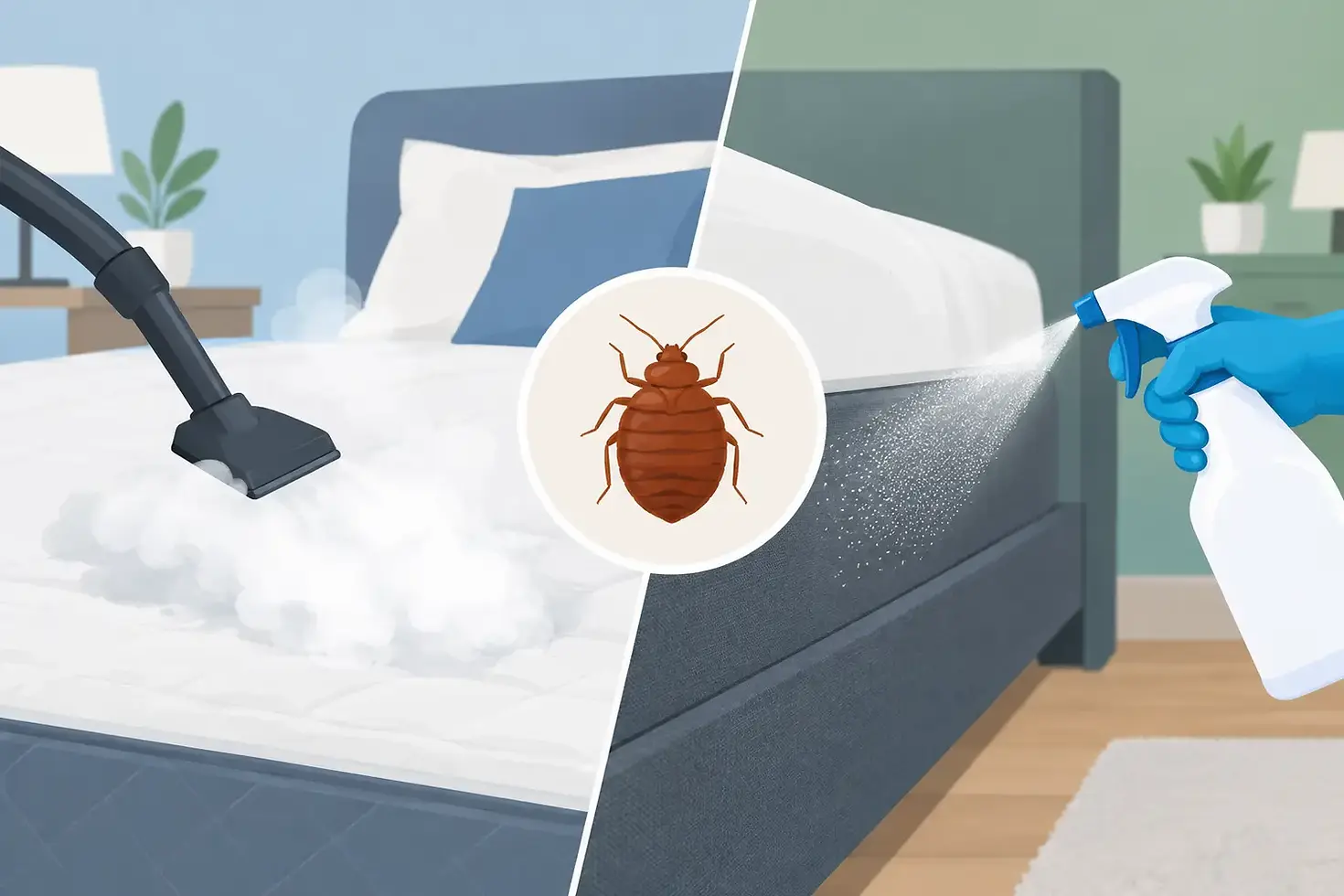
Bedbug Steam Versus Insecticide: Which Works?

Waking with unexplained bites is stressful enough. Finding dark spotting on the mattress, bed frame or skirting boards can make people reach for the fastest-looking treatment. But bedbug steam versus insecticide is not a simple choice between a natural method and a chemical one. Each tackles a different part of the infestation, and the most reliable professional treatment often uses both in the right places.
Bed bugs are exceptionally good at hiding. They can sit inside bed-frame joints, behind headboards, under loose wallpaper, around sockets and in the seams of upholstered furniture. A treatment has to account for the bugs you can see, the ones you cannot, and eggs that may hatch after the first visit.
Bedbug steam versus insecticide: the key difference
Steam works by heat. When correctly applied, professional dry steam delivers lethal temperatures directly to bed bugs and their eggs on contact. It is particularly useful around mattress seams, bed frames, sofas, carpets, curtains and other areas where bugs may be close to the surface.
Insecticide works differently. A trained technician applies an approved professional product precisely to cracks, crevices, bed structures and identified harbourage points. It leaves a residual treatment in suitable areas, meaning bugs that emerge or move through the treated zone can be controlled after the visit.
That difference matters. Steam gives an immediate kill where the heat reaches. Insecticide provides ongoing control where a residual can be safely and effectively applied. Neither method is a magic answer if the inspection is rushed or hiding places are missed.
When steam is the stronger option
Steam can be highly effective when there is clear activity in accessible areas. It is a strong choice for mattress piping, divan bases, upholstered chairs, bed-frame joins and the edges of carpets. Because the treatment is based on heat rather than a residual chemical, it can be useful on sensitive items and in rooms where occupants are particularly concerned about chemical exposure.
It also kills eggs when the heat reaches them. This is a major advantage, as bed bug eggs are often tucked into tight seams and crevices. A technician moves the steam head slowly and methodically, allowing sufficient heat to penetrate the surface without soaking fabrics or forcing bugs away from the treatment area.
The limitation is reach. Steam only works where it makes contact or where heat can penetrate. It will not reliably treat deep voids behind fitted furniture, inside wall gaps, beneath fixed flooring or within inaccessible parts of a bed or room. Moving too quickly reduces its effectiveness, while excessive moisture can damage delicate materials or create unwanted dampness.
Steam is therefore not a quick pass over the bed. It is a detailed, physical treatment that needs the room to be prepared properly and inspected carefully.
Where insecticide has the advantage
Professional insecticide treatment is valuable because bed bugs rarely stay in one obvious place. A few bugs around a mattress can indicate activity in the bed frame, nearby furniture, skirting gaps and adjoining rooms. Residual insecticides are designed to address that movement over time.
A qualified pest controller can select products and application methods appropriate to the property, infestation level and treatment area. The focus is not on spraying every visible surface. It is on treating identified harbourages and routes of movement while following product instructions and safe working practices.
Residual treatment is especially helpful after steam has dealt with visible activity. Bed bugs disturbed from a hiding place, newly hatched nymphs and bugs emerging from protected gaps may later cross a treated area. This creates a second line of control that steam alone cannot always provide.
However, insecticide is not instant in the same way as direct heat. You may still see bed bug activity shortly after treatment as insects leave harbourages or encounter treated surfaces. Some populations can also show reduced sensitivity to certain active ingredients, which is why a professional assessment, correct product choice and follow-up plan matter far more than repeated use of off-the-shelf sprays.
Why a combined treatment is often best
For established infestations, combining methods usually gives the best chance of a lasting result. Steam can be used to kill bed bugs and eggs in exposed, high-risk locations. Carefully targeted residual insecticide can then deal with areas that cannot be steamed thoroughly and help control bugs that emerge later.
This is not about applying more treatment than necessary. It is about applying the right treatment in the right place. A mattress seam may be suited to steam, while the void behind a headboard or a gap around a skirting board may need a different approach. The condition of the room, the presence of children or pets, the type of furniture and whether it is a home, rented flat, hotel room or workplace all affect the treatment plan.
A second visit is often sensible. Bed bug eggs can hatch after the initial treatment, and follow-up inspection lets the technician check activity, address any remaining harbourages and confirm whether further work is needed. Anyone promising that every infestation will be solved with one rushed spray should be treated with caution.
Safety, preparation and realistic expectations
Both steam and professional insecticides must be used with care. Steam can cause burns and may damage heat-sensitive materials if handled incorrectly. Domestic steam cleaners may not maintain the right temperature or dry-steam quality for bed bug work, and using one carelessly can spread bugs to other parts of the room.
Insecticides should only be applied in line with the label and by someone who understands where bed bugs harbour. Residents may need to leave treated rooms for a stated period, keep pets away until surfaces are dry and follow clear re-entry instructions. A reputable technician will explain this before treatment rather than leaving you to guess.
Preparation is equally important. Avoid moving bedding, clothes or furniture into another room before advice is given, as this can spread the infestation. Bag washable items securely, wash them where appropriate, and dry them on a hot setting if the fabric allows. Reduce clutter around the bed so hiding places can be inspected, but do not throw furniture away without professional guidance. Many items can be treated, and dragging an infested mattress through communal areas can spread bed bugs further.
You should also avoid relying on aerosol sprays, foggers or household remedies. Foggers rarely reach the deep cracks where bed bugs hide and can drive them into new areas. Strong-smelling products may make the room unpleasant without solving the problem. The goal is controlled eradication, not simply making activity less visible for a few days.
How to choose the right treatment for your property
If activity is limited to accessible furniture and is caught early, steam may form a major part of the solution. If there are signs across several rooms, persistent bites, bugs in structural gaps or evidence of an established infestation, a combined programme is usually more appropriate.
For landlords and property managers, speed matters because bed bugs can move between adjoining rooms and damage tenant confidence. For hotels, serviced accommodation and workplaces, discreet inspection and a documented, targeted response protect both occupants and reputation. In every setting, accurate identification comes first. Fleas, carpet beetles and other insects can be mistaken for bed bugs, and treating the wrong pest wastes valuable time.
A professional survey should look beyond the mattress. It should assess beds, furniture, room edges, nearby rooms where relevant, signs of spread and the practical steps needed before treatment. RodentX provides inspection-led bed bug treatment across Manchester and Greater Manchester, with discreet attendance and clear advice on preparation, safety and follow-up.
If you suspect bed bugs, keep the room contained as far as practical and arrange an assessment promptly. The earlier the infestation is identified, the more treatment options are available and the easier it is to stop a small problem becoming one that affects the whole property.


Comments